Medical Education

Eye Exam and Glasses in Geneva: Everything You Need to Know for Clear Vision
Focus Keyphrase: Eye Exam Geneva
SEO Title (English): Eye Exam Geneva: Why, When & How? Your Guide
SEO Description (English): Learn about eye exams in Geneva. Discover why they are important, how often to get them, and what a comprehensive exam involves. Glasses and eye exams at our practice in Geneva.
Why get an eye exam in Geneva? The Importance of Regular Check-ups
A regular eye exam is essential to preserve your eye health and vision quality, at any age. An eye exam is not just about determining if you need glasses or renewing your prescription. It helps to:
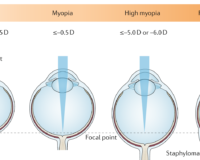
- Screen for and correct refractive errors: myopia, hyperopia, astigmatism, presbyopia.
- Screen for and monitor eye diseases: glaucoma, cataracts, age-related macular degeneration (AMD), diabetic retinopathy... Often, these diseases are asymptomatic in their early stages, and only an eye exam can allow for early diagnosis.
- Adjust your vision correction: Your vision can change over time, so it is important to regularly check if your optical correction (glasses or contact lenses) is still adapted to your needs.
- Prevent eye strain and headaches: Poorly corrected vision can lead to eye strain, headaches, concentration difficulties... An eye exam helps optimize your visual comfort.
- Monitor overall eye health: The eye exam assesses the health of all eye structures (cornea, lens, retina, optic nerve...) and detects any abnormalities.
A regular eye exam is an important preventive measure for your eye health, just like a general health check-up.
How Often Should You Get an Eye Exam in Geneva? Recommendations
The recommended frequency of eye exams varies depending on age and risk factors:
- Children and adolescents:
- From birth: Neonatal screening performed at the maternity ward.
- Around 9 months: First comprehensive exam with a pediatric ophthalmologist.
- Around 2-3 years: Check-up exam.
- Before entering primary school (around 5-6 years old): Screening exam.
- Then, regular exams: At least every 1 to 2 years, or more often if recommended by the pediatric ophthalmologist, or if symptoms occur.
- Adults (18-60 years old):
- Every 2 to 3 years: In the absence of symptoms or risk factors.
- More frequently: If you wear glasses or contact lenses, have a family history of eye disease, suffer from chronic conditions (diabetes, hypertension...), or experience visual symptoms (blurred vision, eye strain, headaches...).
- People over 60 years old:
- Annual exam: The risk of age-related eye diseases (glaucoma, cataracts, AMD...) increases after age 60, so an annual exam is recommended.
- More frequently: If you have risk factors or are being monitored for an eye disease.
These recommendations are general guidelines. Your ophthalmologist may advise a more frequent examination schedule based on your personal situation and risk factors. Do not wait for the recommended deadline if you experience symptoms or have concerns about your vision.
What Happens During a Comprehensive Eye Exam in Geneva? Key Steps
A comprehensive eye exam performed in our practice in Geneva typically includes the following steps:
- Anamnesis (medical history): Your ophthalmologist will ask you questions about your medical and family history, any visual symptoms you may have, your lifestyle, your visual needs, etc.
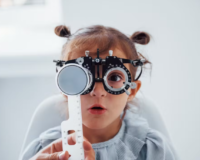
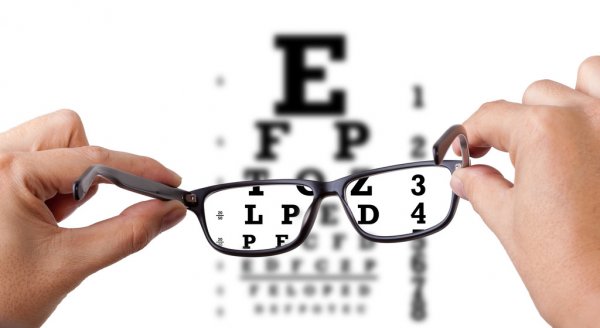
- Visual acuity measurement: Performed using a letter chart (Snellen chart) or optotypes (drawings for children) to assess your distance and near vision, with and without optical correction.
- Objective and subjective refraction:
- Objective refraction (automated): Automated measurement of your eye's refraction using an autorefractor.
- Subjective refraction: Refining the optical correction by presenting different lenses to you and asking which lens allows you to see the clearest. This step determines your glasses or contact lens prescription.
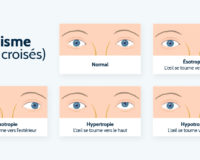
- Binocular vision and ocular motility examination: Assessment of your eyes' ability to work together, strabismus screening (crossed eyes), analysis of eye movements.
- Intraocular pressure measurement (tonometry): Important exam for glaucoma screening. Performed using a tonometer (air-puff or contact).
- Slit-lamp examination: Microscope used to examine the structures of the front of the eye in detail (cornea, iris, lens...) and screen for certain conditions such as cataracts or corneal abnormalities.
- Fundus examination (ophthalmoscopy): After dilating the pupil with eye drops, the ophthalmologist examines the retina, optic nerve, and blood vessels of the fundus to screen for diseases such as AMD, glaucoma, diabetic retinopathy, etc.
- Additional examinations if necessary: Visual field test, OCT, angiography, etc., depending on the results of the basic exam and diagnostic suspicions.
The eye exam is painless and usually lasts between 20 and 40 minutes. After the exam, your ophthalmologist will explain the results, give you personalized advice, and prescribe optical correction if necessary.
Glasses in Geneva: Choosing the Right Correction and Frame
If the eye exam reveals that you need glasses, your ophthalmologist will give you a glasses prescription. This prescription contains various information, including the correction for each eye (sphere, cylinder, axis, addition if presbyopic), pupillary distance, and possibly specific recommendations (lens type, treatments...).
Choosing your glasses: lenses and frame
- Choosing your lenses:
- Unifocal lenses: To correct distance or near vision (myopia, hyperopia, astigmatism).
- Progressive lenses: To correct both distance and near vision in presbyopic individuals.
- Computer lenses (intermediate vision): For intermediate vision (computer work, reading at mid-distance).
- Lens treatments: Anti-reflective, anti-scratch, anti-UV, blue light filter, photochromic (lenses that darken in sunlight)... Your optician will advise you on the treatments best suited to your needs.
- Lens materials: Organic (plastic), mineral (glass), polycarbonate, trivex... The choice will depend on your correction, your use, and your preferences (esthetics, lightness, resistance...).
- Choosing your frame:
- Style and aesthetics: Shape, color, material... Choose a frame that you like and that enhances your face. Do not hesitate to ask your optician for advice.
- Comfort and fit: The frame must be comfortable to wear, well-fitted to your nose and ears, and not slip. It must be suitable for your correction (lens thickness).
- Frame materials: Plastic, metal, titanium, wood, horn... Each material has its advantages and disadvantages (lightness, strength, hypoallergenic properties, aesthetics, price...).
Your optician in Geneva will guide you in choosing your lenses and frame to guarantee optimal visual comfort and glasses perfectly suited to your vision and style.
Eye Exam and Glasses in Geneva: Our Ophthalmology Practice at Your Service
For a comprehensive eye exam and personalized advice for choosing your glasses in Geneva, trust our ophthalmology practice. Our experienced ophthalmologists and opticians welcome you in a modern and warm environment to take care of your vision and offer you the best optical solutions.
Consult our ophthalmology practice for a comprehensive eye exam and personalized advice for your glasses. Book your appointment with us over the phone +41 (0) 22 346 26 78 or through our online booking.


Leave a Comment