Medical Education

Myopia (Nearsightedness): Understanding Blurry Distance Vision and Solutions in Geneva
Focus Keyphrase: Myopia Geneva
SEO Title (English): Myopia Geneva: Symptoms, Causes & Treatments
SEO Description (English): Learn about myopia (nearsightedness) in Geneva, or blurry distance vision. Discover the symptoms, possible causes, solutions (glasses, contacts, surgery) and prevention tips. Expert ophthalmology practice in Geneva.
What is Myopia (Nearsightedness)? Blurry Distance Vision Explained Simply
Myopia, or nearsightedness, is a very common vision condition characterized by blurry distance vision, while near vision usually remains clear. People with myopia have difficulty seeing distant objects clearly, such as road signs, the blackboard at school, or distant landscapes.
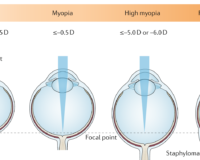
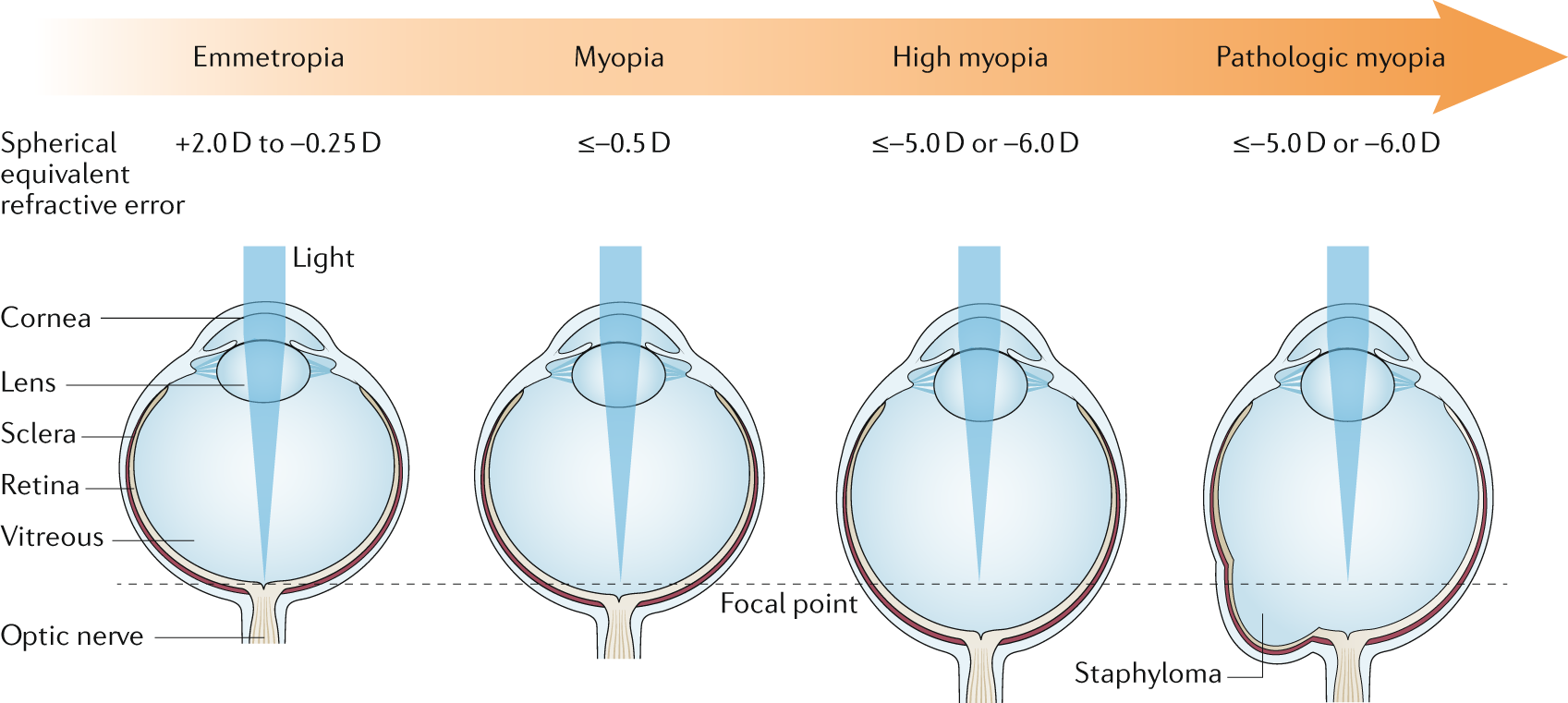
Imagine that your eye is a bit too "long" or that your cornea (the clear front surface of the eye) is too curved. In these cases, the image of distant objects forms in front of the retina (the light-sensitive membrane at the back of the eye) instead of directly on the retina. This is what causes blurry distance vision.
Symptoms of Myopia: How to Know if You Are Nearsighted?
The main symptom of myopia is blurry distance vision. Other telltale signs of myopia may include:
- Blurred vision when looking at distant objects: Difficulty reading road signs, seeing the television from afar, recognizing faces at a distance...
- Tendency to squint to see better at a distance: This reflex slightly reduces blur by decreasing the eyelid opening.
- Eye strain, headaches: Especially after using distance vision (driving, movies...).
- Need to get closer to objects to see them clearly: Reading a book very close, sitting close to the television...
- Clear near vision: Reading, computer work, sewing... usually do not pose a problem, at least in the early stages of myopia.
If you experience one or more of these symptoms, it is advisable to consult an ophthalmologist for an eye exam and accurate diagnosis.
Causes of Myopia: Why Do People Become Nearsighted?
Myopia is a complex condition with multiple and still poorly understood causes. The main factors are:
- Genetic and hereditary factors: Myopia has a strong hereditary component. The risk of developing myopia is higher if one or both parents are nearsighted. Several genes predisposing to myopia have been identified.
- Environmental factors:
- Lack of exposure to natural light (outdoors) during childhood: Numerous recent studies suggest that spending less time outdoors and more time indoors, especially in near vision, increases the risk of myopia.
- Intensive near work: Prolonged reading, excessive use of screens (smartphones, tablets, computers) may promote the development of myopia, especially in children and adolescents.
- Ethnicity: Myopia is more common in certain populations, especially in East Asia.
Myopia is therefore likely the result of a complex interaction between genetic predisposition and environmental factors. The dramatic increase in the prevalence of myopia worldwide, especially in younger generations, suggests that environmental factors are playing an increasingly important role.
Diagnosis of Myopia: A Simple and Quick Eye Exam
Myopia is diagnosed during a comprehensive eye exam performed by an ophthalmologist or optician-optometrist. Key examinations include:
- Visual acuity measurement: Performed with and without optical correction (glasses) to assess the quality of distance and near vision.
- Objective and subjective refraction:
- Objective refraction (automated): Performed using an autorefractor, a device that automatically measures the eye's refraction.
- Subjective refraction: The examiner refines the optical correction by presenting different lenses to the patient and asking which lens allows them to see the clearest. Subjective refraction determines the final prescription for glasses or contact lenses.
- Slit-lamp examination and fundus examination: To check for the absence of other eye diseases and assess eye health.
These examinations are painless and allow for the diagnosis of myopia, measurement of its severity (in diopters), and prescription of appropriate optical correction.
Solutions to Correct Myopia in Geneva: Glasses, Contacts, Surgery
Myopia does not spontaneously cure itself, but it can be effectively corrected with various optical and surgical solutions:
Corrective Glasses
- Unifocal concave lenses: This is the most common and simplest correction for myopia. Concave (diverging) lenses help converge the image onto the retina and restore clear distance vision.
Contact Lenses
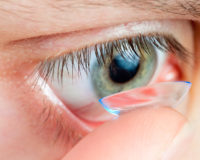
- Soft or rigid contact lenses: Contact lenses correct myopia in the same way as glasses, by modifying the path of light so that it focuses correctly on the retina. They offer a wider field of vision and better peripheral vision than glasses, and may be more aesthetically pleasing for some.
- Orthokeratology (night lenses): Rigid lenses worn only at night that temporarily reshape the cornea during sleep. Upon removal of the lenses in the morning, the cornea temporarily retains a corrected shape, allowing for clear vision throughout the day without glasses or lenses. The effect is reversible, and lenses must be worn nightly to maintain correction.
Refractive Surgery
- LASIK, PRK, SMILE: Laser refractive surgery techniques that reshape the cornea to permanently correct myopia. These procedures are laser-based, quick, and generally effective. They are only possible in adulthood, once myopia has stabilized, and under certain conditions (absence of ocular contraindications).
- Phakic implants: Intraocular lens implants placed in front of the natural lens to correct high myopia, when laser surgery is not possible or sufficient.
- Clear lens exchange: In some cases of high myopia, especially in older individuals, replacing the natural lens with an intraocular lens may be offered to correct myopia and prevent or treat cataracts.
The choice of the best myopia correction solution will depend on your age, the severity of your myopia, personal preferences, lifestyle, and your ophthalmologist's advice.
Prevention and Management of Myopia: Tips to Preserve Your Vision and Your Children's Vision in Geneva
Although it is not possible to completely prevent the onset of myopia, certain measures can help reduce the risk of its progression, especially in children:
- Spend more time outdoors, in natural light: Encourage your children to play and engage in outdoor activities for at least 1 to 2 hours per day. Natural light appears to have a protective effect against myopia.
- Limit time spent in near vision, especially on screens: Monitor your children's screen time (smartphones, tablets, video games, television) and encourage regular breaks during near vision activities (reading, homework...). Adopt the "20-20-20" rule: every 20 minutes, look at an object 20 feet (6 meters) away for 20 seconds.
- Ensure sufficient lighting for near activities: Good lighting reduces eye strain.
- Adopt good posture when reading and working on screens: Avoid reading or using screens too close to the eyes.
- Regular eye exams: Have your children's vision checked regularly, from the age of 9 months, then around 2-3 years, before starting school, and thereafter according to your ophthalmologist's recommendations. Early detection of myopia allows for rapid and appropriate management.
These tips can help prevent or slow the progression of myopia and preserve good vision for you and your children.
Consult our ophthalmology practice for medical advice on your case. Book your appointment with us over the phone +41 (0) 22 346 26 78 or through our online booking.


Leave a Comment