
Medical Education

Strabismus (Crossed Eyes): Understanding, Diagnosing, and Treating in Geneva
Focus Keyphrase: Strabismus Geneva
SEO Title (English): Strabismus Geneva: Symptoms, Causes & Effective Treatments
SEO Description (English): Learn about strabismus (crossed eyes or squint) in Geneva. Discover the symptoms, possible causes, and available treatments for adults and children. Specialized ophthalmology practice in Geneva.
What is Strabismus? Eyes Not Looking Straight: Simple Explanation
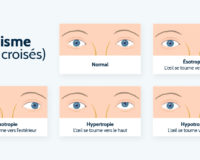
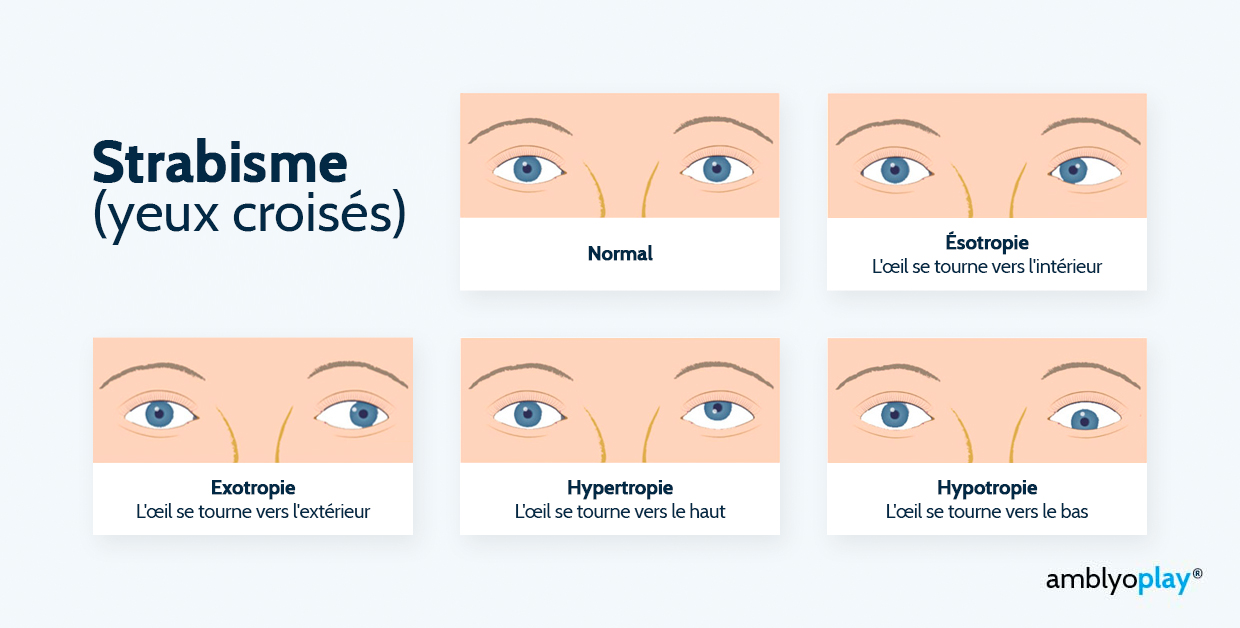
Strabismus, commonly known as "crossed eyes" or "squint," is a vision condition in which the two eyes are not properly aligned and do not look in the same direction at the same time. Normally, our two eyes work together, pointing at the same object. In strabismus, one eye may look straight ahead, while the other eye deviates inward (convergent strabismus or esotropia), outward (divergent strabismus or exotropia), upward (hypertropia), or downward (hypotropia).
Strabismus can be constant (always present) or intermittent (appearing from time to time). It can affect only one eye (unilateral strabismus) or alternate between eyes (alternating strabismus). It is more common in children, but can also occur in adulthood.
Symptoms of Strabismus: How to Recognize It?
The most obvious sign of strabismus is eye misalignment. However, other symptoms may also be present, especially in young children who cannot always clearly express their discomfort:
- Visibly misaligned eyes: One eye appears to deviate from the other.
- Frequent blinking of one eye or squinting, especially in bright light.
- Tilting the head to see better.
- Double vision (diplopia): Seeing two images of the same object (especially in adults).
- Eye strain, headaches.
- Difficulty judging distances and depth (impaired depth perception).
- Amblyopia ("lazy eye"): In some cases, strabismus can lead to amblyopia, a decrease in vision in one eye that is not being used enough.
In babies, it is sometimes difficult to distinguish true strabismus from pseudostrabismus (illusion of strabismus due to facial features). If in doubt, an ophthalmological consultation is recommended.
Causes of Strabismus: Why Do Eyes Misalign?
The causes of strabismus are varied and can be grouped into several categories:
- Uncorrected refractive errors: Hyperopia (farsightedness) is a common cause of convergent strabismus in children. Myopia (nearsightedness) and astigmatism can also be involved.
- Convergence insufficiency: Difficulty converging the eyes to see up close. May lead to intermittent divergent strabismus.
- Oculomotor muscle problems: Weakness or imbalance of the muscles that control eye movements. May be congenital or acquired.
- Neurological problems: Damage to the nerves or nerve centers that control eye movements (rarer).
- Congenital cataract, ptosis (drooping eyelid), eye tumors: May be associated with strabismus.
- Hereditary factor: Strabismus is more common if family members are affected.
In many cases, especially in children, the precise cause of strabismus remains unknown (so-called "idiopathic" strabismus). It is important to investigate and treat the underlying cause when possible.
Diagnosis of Strabismus: Essential Eye Examinations
Strabismus is diagnosed during a comprehensive eye exam performed by an ophthalmologist or orthoptist. Key examinations include:
- Anamnesis (medical history): Age of onset of strabismus, type of deviation, associated symptoms, family history, etc.
- Visual acuity test: To assess vision in each eye and screen for amblyopia.
- Refraction test: To measure the necessary optical correction (glasses).
- Ocular motility examination: Study of eye movements in all directions of gaze to assess the function of the oculomotor muscles.
- Strabismus screening tests (cover test, Hirschberg test, etc.): Help highlight eye deviation and assess its type and severity.
- Slit-lamp examination and fundus examination: To rule out other ocular or neurological causes of strabismus.
- Orthoptic assessment: Performed by an orthoptist, it allows for a deeper evaluation of strabismus, precisely measures the deviation, explores binocular vision (depth perception), and proposes orthoptic rehabilitation if necessary.
These examinations are painless and allow for the diagnosis of strabismus, determination of its type and cause, and implementation of appropriate treatment. In children, early screening is crucial to prevent amblyopia.
Treatments for Strabismus: Correcting Alignment and Improving Vision
The goal of strabismus treatment is twofold: realign the eyes and improve vision (especially in case of amblyopia). Treatment options vary depending on the type of strabismus, its severity, the patient's age, and whether or not amblyopia is present:
Optical Correction (Glasses)
- Corrective glasses: In many cases, especially in convergent strabismus related to hyperopia, wearing appropriate glasses corrects the refractive error and reduces or eliminates strabismus.
- Prisms: Incorporated into eyeglass lenses, prisms can help realign the eyes in certain types of mild or persistent strabismus.
Amblyopia Treatment ("Rehabilitation" of the Lazy Eye)
- Occlusion (patching): Involves covering the dominant eye (the "good eye") with a patch for part of the day to force the amblyopic eye (the "lazy eye") to work and develop its vision.
- Atropine eye drops: An alternative to patching, atropine eye drops instilled in the "good eye" blur its near vision and force the amblyopic eye to work.
- Orthoptic rehabilitation: Visual exercises performed with an orthoptist to stimulate the amblyopic eye and improve binocular vision.
Strabismus Surgery
- Oculomotor muscle surgery: Surgical procedure that involves strengthening or weakening certain oculomotor muscles to realign the eyes. Surgery may be performed on one or more muscles, on one or both eyes. It is often considered in cases of significant or persistent strabismus despite other treatments. Surgery can be performed in children and adults.
Orthoptic Rehabilitation (in addition to other treatments)
- Orthoptic sessions: Visual exercises performed with an orthoptist to improve convergence, binocular vision, coordination of eye movements, and visual comfort. Orthoptic rehabilitation is often complementary to glasses, patching, or surgery.
Strabismus treatment is personalized and adapted to each case. It is important to start treatment as early as possible, especially in children, to maximize the chances of success and prevent amblyopia. Regular follow-up with the ophthalmologist and orthoptist is essential.
Strabismus and Binocular Vision: The Importance of Proper Alignment
Proper eye alignment is essential for normal binocular vision, that is, the ability to use both eyes together to see in depth and judge distances. Strabismus, if left uncorrected, can disrupt or prevent the development of binocular vision, which can have consequences for depth perception and visual comfort.
Strabismus treatment aims not only to realign the eyes aesthetically, but also and above all to restore or develop good binocular vision, essential for many daily life activities.
Strabismus and Your Vision in Geneva: Our Expert Ophthalmology Practice
If you think your child or yourself may have strabismus, or if you have been recently diagnosed and are seeking care in Geneva, our ophthalmology practice is at your disposal. We perform all necessary examinations for the diagnosis of strabismus and amblyopia, and offer comprehensive care, from glasses to surgery, including orthoptic rehabilitation.
[Your Ophthalmology Practice Name]
[Your Practice Address in Geneva]
[Phone Number]
[Website (if applicable)]
Consult our ophthalmology practice for medical advice on your case. Book your appointment with us over the phone +41 (0) 22 346 26 78 or through our online booking.


Leave a Comment