
Medical Education

AMD (Age-Related Macular Degeneration): Understanding, Diagnosing, and Managing in Geneva
Focus Keyphrase: AMD Geneva
SEO Title (English): AMD Geneva: Symptoms, Diagnosis & Management
SEO Description (English): Learn about AMD in Geneva (Age-Related Macular Degeneration). Discover the symptoms, diagnostic methods and management options. Expertise from your ophthalmology practice in Geneva.
What is AMD (Age-Related Macular Degeneration)? Essential Definition
Age-Related Macular Degeneration (AMD) is a degenerative eye disease that affects the macula, the central part of the retina responsible for sharp, detailed, and color vision. Imagine the macula as the center of your field of vision, the part that allows you to read, recognize faces, and see details.
AMD is the leading cause of vision loss in people over 50 in developed countries. It does not cause total blindness, but it can significantly impair central vision, making daily activities such as reading, driving, or facial recognition difficult.
Symptoms of AMD: Early Warning Signs to Recognize
Symptoms of AMD can vary depending on the stage and form of the disease. The most common signs include:
- Blurred or distorted central vision: Straight lines may appear wavy or broken. A dark or blurry spot may appear in the center of the field of vision.
- Difficulty reading small print or seeing fine details.
- Need for more light to read or perform close-up tasks.
- Difficulty adapting to changes in lighting.
- Altered color perception: Colors may appear less vibrant or duller.
It is crucial to note that AMD mainly affects central vision. Peripheral (side) vision is usually preserved, which explains why AMD does not lead to total blindness. If you notice any of these symptoms, an ophthalmological consultation is essential.
Different Forms of AMD: Dry AMD and Wet AMD
There are two main forms of AMD:
- Dry AMD (or atrophic): This is the most common form (about 80-90% of cases). It progresses slowly over several years, through a gradual atrophy of the macular cells. There is no cure for dry AMD, but measures can be taken to slow its progression.
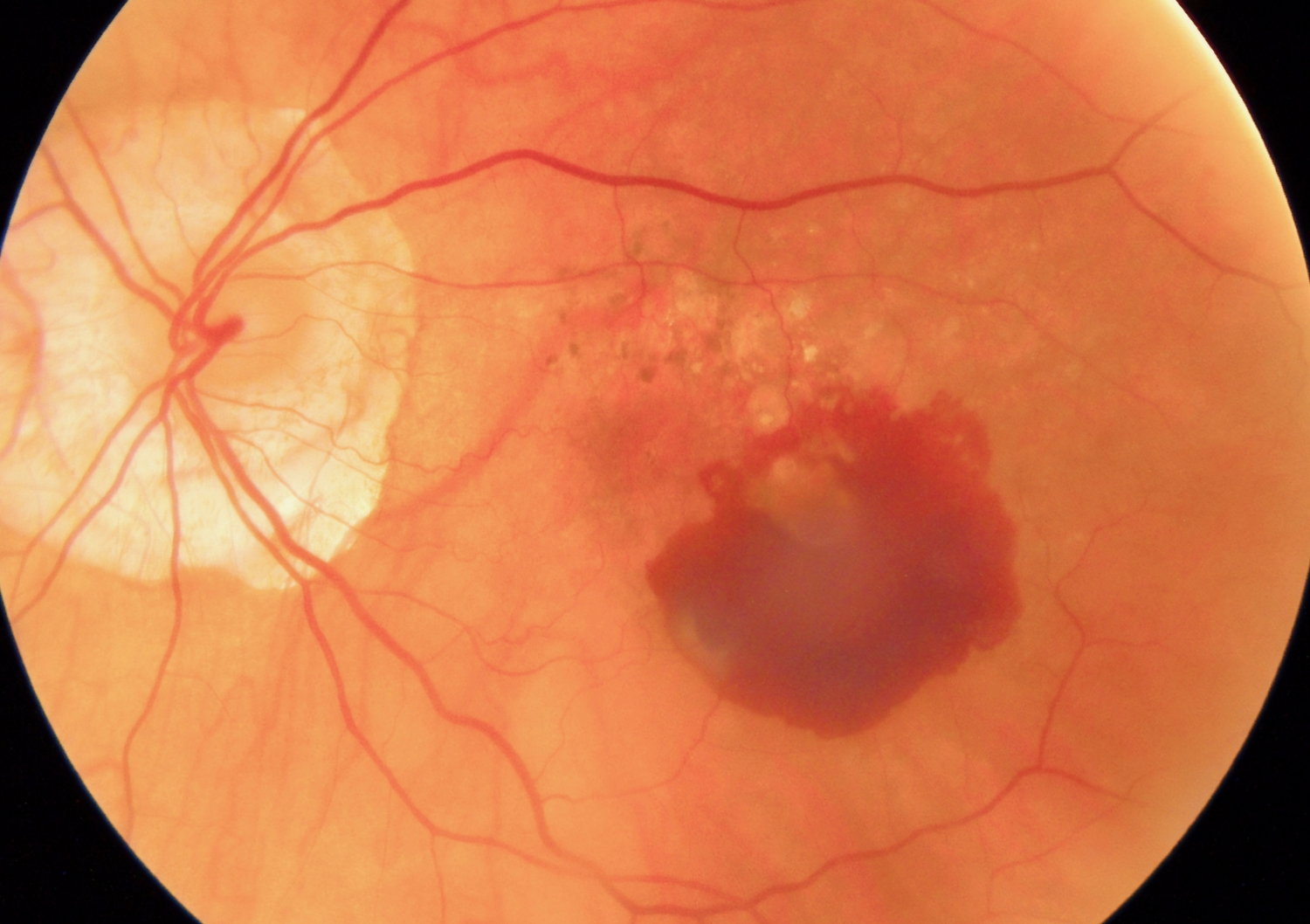
- Wet AMD (or exudative): Less common (10-20% of cases) but more aggressive. It is characterized by the abnormal growth of blood vessels under the retina, which leak and cause hemorrhages and macular edema. Wet AMD can lead to rapid vision loss if left untreated. Effective treatments are available to slow down, or even stop, the progression of wet AMD.
The distinction between dry and wet AMD is essential, as the management and treatments differ considerably. Only a thorough eye exam can determine the form of AMD and the appropriate treatment.
Risk Factors for AMD: Who is Affected?
Several factors increase the risk of developing AMD:
- Age: The risk increases significantly after age 50, and particularly after age 60. This is the main risk factor.
- Family history of AMD: A genetic factor is involved.
- Smoking: Smoking is a major and modifiable risk factor. Smokers have a significantly higher risk of developing AMD and seeing the disease progress more rapidly.
- Fair ethnicity: Caucasians are more affected.
- High blood pressure and cardiovascular diseases.
- Obesity.
- Prolonged exposure to blue light (sunlight, screens).
- Certain nutritional deficiencies.
Knowing these risk factors helps to adopt preventive measures and be more vigilant about your eye health, especially if you are concerned by several of these factors.
Diagnosis of AMD: Key Eye Examinations
Diagnosis of AMD is based on a comprehensive eye examination. Key examinations include:
- Visual acuity measurement: To assess vision loss.
- Fundus examination (ophthalmoscopy): After pupil dilation, to visualize the retina, macula, and look for characteristic signs of AMD (drusen, atrophy, neovessels).
- Optical Coherence Tomography (OCT): A non-invasive imaging test that provides high-resolution cross-sectional views of the retina and can detect very early macular abnormalities, as well as monitor disease progression and treatment effectiveness.
- Retinal angiography (fluorescein or indocyanine green angiography): An examination that visualizes the blood vessels of the retina after injection of a dye, and detects neovessels characteristic of wet AMD. This test is usually performed when wet AMD is suspected.
- Amsler grid test: A simple test you can perform yourself at home to monitor your central vision and detect visual distortions.
These examinations are painless and allow your ophthalmologist to make an accurate diagnosis of AMD, determine its form and stage, and propose the most appropriate management.
Management of AMD: Slowing Progression and Preserving Vision
There is currently no cure for AMD, but effective treatments are available to slow the progression of the disease and preserve vision, especially in the wet form. Management of AMD depends on its form:
Dry AMD: Slowing Progression
- Specific dietary supplements: Studies have shown that supplementation with vitamins (C, E), antioxidants (lutein, zeaxanthin), zinc, and copper can slow the progression of dry AMD at an intermediate or advanced stage. Your ophthalmologist can advise you on suitable supplements.
- Smoking cessation: Essential to slow disease progression.
- Regular monitoring: Regular eye exams to monitor progression and quickly detect any conversion to the wet form.
- Visual aids and low vision rehabilitation: To optimize remaining vision and facilitate daily activities.
Wet AMD: Treatments to Stabilize and Improve Vision
- Intravitreal injections of anti-VEGF (Anti-Vascular Endothelial Growth Factor): This is the standard treatment for wet AMD. These drugs, injected directly into the eye, block the growth of new blood vessels and reduce leakage, often stabilizing vision, and even improving it in some cases. Injections are usually repeated regularly.
- Photodynamic therapy (PDT): Another treatment option, less commonly used today, which involves injecting a photosensitive drug and then activating this drug with a laser to destroy neovessels.
- Laser photocoagulation: Used in certain specific cases of wet AMD.
- Low vision rehabilitation and visual aids: To optimize remaining vision.
AMD management is personalized and requires regular follow-up with your ophthalmologist. Early diagnosis and appropriate treatment are essential to best preserve your vision.
Prevention of AMD: Acting to Protect Your Vision
Although it is not possible to completely eliminate the risk of AMD, certain measures can help reduce this risk and slow its onset or progression:
- Quit smoking: This is the most important and effective preventive measure.
- Adopt a healthy and balanced diet, rich in colorful fruits and vegetables, fatty fish (omega-3s), and low in saturated fats.
- Maintain a healthy weight and engage in regular physical activity.
- Control your blood pressure and cholesterol.
- Protect your eyes from blue light: Wear quality sunglasses that protect against UV and blue light, and limit excessive screen exposure.
- See your ophthalmologist regularly, especially after age 50, for early detection of AMD and other eye diseases.
Prevention and early detection are the best assets to preserve your vision in the face of AMD.
AMD and Your Vision in Geneva: Our Ophthalmology Practice by Your Side
If you are concerned about your risk of AMD, are experiencing suggestive symptoms, or have been diagnosed with AMD, our ophthalmology practice in Geneva is here to support you. We perform all necessary examinations for the diagnosis of AMD, offer personalized management, and ensure regular follow-up to best preserve your vision.
[Your Ophthalmology Practice Name]
[Your Practice Address in Geneva]
[Phone Number]
[Website (if applicable)]
Consult our ophthalmology practice for medical advice on your case. Book your appointment with us over the phone +41 (0) 22 346 26 78 or through our online booking.


Leave a Comment